MONTESSORI EDUCATION
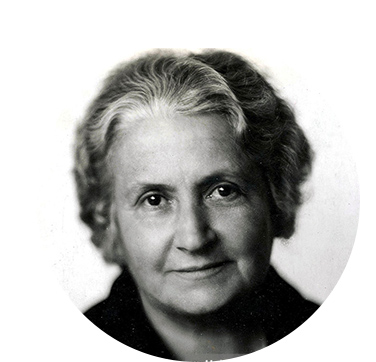
Maria Montessori was born in Italy in 1870 and graduated as a medical doctor in July 1896. Her initial interest in the needs of children with learning disabilities evolved in 1901 into her own philosophy on teaching. She believed that in order to learn, a child needed to actively participate in their own learning and that this learning continued outside of the classroom. She did not favour external motivations for learning but rather believed that children had a desire to learn because they were naturally curious and loved to have knowledge. She promoted the idea of educators cultivating children’s natural desire to learn by being perceptive to their sensitive periods and carefully preparing the learning environment. She saw the role of the educator as a facilitator.
Differences between Montessori and Traditional Education
| Monntessori Education | Traditional Education | |
|---|---|---|
| Based on helping the natural development of the human being | Based on the transfer of a national curriculum | |
| Children learn at their own pace and follow their own individual interest | Children learn from a set curriculum according to a time frame that is the same for everyone | |
| Children teach themselves using materials specially prepared for the purpose | Children are taught by the teacher | |
| Child is an active participant in learning | Child is a passive participant in learning | |
| Understanding comes through the child’s own experiences via the materials and the promotion of children’s ability to find things out for themselves | Learning is based on subjects and is limited to what is given | |
| Learning is based on the fact that physical exploration and cognition are linked | Children sit at desks and learn from a whiteboard and worksheets | |
| Child can work where he/she is comfortable, move around and talk at will while not disturbing others | Child is usually assigned own chair and encouraged to sit still and listen during group sessions | |
| The teacher works in collaboration with the children | The class is teacher led | |
| The child’s individual development brings its own reward and therefore motivation | Motivation is achieved by a system of reward and punishment | |
| Environment and method encourage internal self- discipline | Teacher acts as primary enforcer of external discipline | |
| Child works as long as he/she wishes on chosen project | Child generally given specific time limit for work | |
| Uninterrupted work cycles | Block time, period lessons | |
| Mixed age groups | Same age groups | |
| Working and learning matched to the social development of the child | Working and learning without emphasis on the social development of the child | |
| Shared emphasis on intellectual, social, emotional and spiritual development | Main emphasis on intellectual development | |
| Shared focus on the acquisition of academic, social, practical and life skills | Main focus on academics |
Montessori Australia
Montessori Schools and Centres Australia